Viruses and bacteria are microscopic organisms. They may not be visible by naked eyes, but millions of them surround us all.
Viruses are an assembly of different molecules containing genetic material. Most biologists do not consider them living, as they need to enter a host cell to survive and reproduce. However, they are also quite selective about their hosts.
Bacteria are the smallest and simplest microbes with a free-floating genetic material. They are abundant in soil, inhabiting plant root systems to help them in nitrogen-fixation. Also, within the human body, they inhabit the digestive system to aid in energy metabolism and digestion.
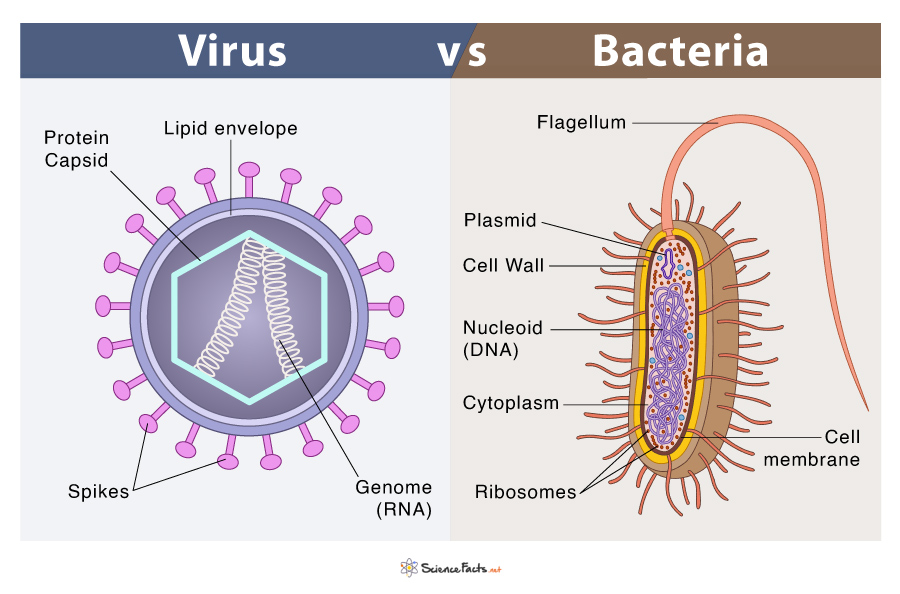
Virus vs Bacteria
Compare and Contrast
Though both of them are microbes and cause serious harm to the living world, they are pretty different in their structure, composition, and mode of action. So let us discuss their differences.
What Is the Difference between Virus and Bacteria
What Do Viruses and Bacteria Have in Common
Although vastly different from each other, both bacteria and viruses share some common features. They are given below:
No membrane-bound organelles.
Microscopic
Causes disease
Carry genetic material
Can spread through coughing, sneezing, or coming into contact with contaminated surfaces, animals, items, or people.
Can be treated with vaccines
References 28 Differences between Bacteria and Virus – Microbenotes.com Differences between Bacteria and Viruses – Thoughtco.com Virus Vs Bacteria – Microscopemaster.com What’s the Difference between Bacteria and Viruses? – Imb.uq.edu.au Bacterial and Viral Infections – Webmd.com
Article was last reviewed on Monday, October 11, 2021
